Medical Personnel's Duty to Care in Emergencies
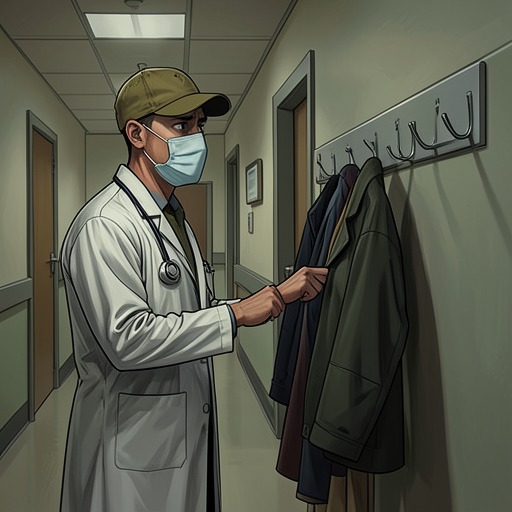
Five Days at MemorialMedical Personnel's Duty to Care in Emergencies is the obligation of medical professionals to care for patients even when an emergency exposes them to greater-than-usual risk. In the account of Katrina and Memorial Medical Center, that duty is not a simple demand for limitless sacrifice or unquestioning obedience: it is tested through evacuation decisions, the treatment of patients classified as less likely to benefit, and the effort to preserve safe care amid collapsing systems. The book places the obligation alongside fairness, professional judgment, and responsibility for the human consequences of decisions made under pressure.
Meaning and ethical scope
The American Medical Association’s ethical directive, as discussed in the book, calls on physicians to serve in emergencies “even in the face of greater than usual risk.” Anna Pou challenged the ease with which such a principle can be stated. Addressing medical groups, she said, “The duty to care sounds easy, great. It’s not always so; it’s more romantic on paper.” Her objection foregrounds the distance between an ethical aspiration and the conditions in which clinicians must act: the duty is invoked in an emergency, but the emergency may leave providers with danger, uncertainty, and inadequate support.
A 2012 report from the Institute of Medicine gave the obligation a complementary institutional dimension. It argued that crisis conditions may justify limiting access to scarce treatments, but that providers still have duties to care for patients, treat them fairly, and steward resources. When scarcity requires limits, decisions should be transparent, consistent, proportional to the shortage, and accountable. The formulation therefore does not erase triage; it sets conditions for how triage should be conducted and resists treating the emergency as permission to abandon fairness.
Care under evacuation pressure
At Memorial, the approaching floodwaters turned an emergency meeting into what Karen Wynn experienced as a military operation. Susan Mulderick announced that the water was coming, and the immediate objective became moving nearly two hundred patients before the power failed. Staff initially agreed to send the sickest first: patients in intensive care, newborns, high-risk pregnant patients, dialysis patients, and two vulnerable bone-marrow-transplant patients. The plan reflected dependence on life support and the difficulty of maintaining care if electricity disappeared, but there were too few outside resources for the hospital to manage the evacuation alone.
The practical meaning of care also appeared in disputes over who could make decisions and what counted as a safe transfer. On the helipad, a nurse who was an Air Force captain challenged the disorder, relied on her flight-line training, and was put in charge of clearing the area so pilots could land. Later, neonatal nurses resisted a helicopter flight plan that would take their fragile patients to a hospital other than the one that had agreed to receive them. When Richard Deichmann insisted that the babies could go wherever the pilot was headed, the nursing director countered that she would not release them unless the flight plan was changed to Baton Rouge. Approval came within minutes; a later message confirmed that the babies had arrived, including Baby Boy S, whose oxygen level matched what it had been on high-tech support. These episodes show care as more than the act of moving a patient: it also required attention to capacity, receiving arrangements, and the expertise of staff closest to the patients.
Triage, DNR status, and fairness
The evacuation plan also exposed a consequential confusion between a patient’s wishes about resuscitation and an estimate of that patient’s prospects in a disaster. Memorial’s doctors made an exception to the initial priority for the sickest and most machine-dependent patients: everyone with a Do Not Resuscitate order would be evacuated last. Four ICU patients fell into that category, including Helen Breckenridge and Jannie Burgess. When workers brought Breckenridge downstairs, a doctor ordered her returned upstairs because she could not go in the first sweep.
A DNR order concerns whether a patient whose breathing or heartbeat has stopped should be revived. It is not the same as a living will, which under Louisiana law could specify that life-sustaining procedures be withheld or withdrawn in a terminal and irreversible condition. Richard Deichmann later explained that he believed DNR patients had the least to lose if calamity struck, based on his mistaken understanding that a DNR order required a certified terminal or irreversible condition. The Institute of Medicine later argued that DNR orders were not useful parameters for disaster triage: they reflected advance preferences about end-of-life care more than an accurate estimate of survival. The contrast makes the fairness requirement concrete: a preference about resuscitation should not automatically be converted into a judgment about evacuation priority.
The history of Jannie Burgess sharpens the stakes of equitable care without making her experience identical to the Katrina triage decision. A licensed practical nurse with thirty-five years of work in New Orleans hospitals and nursing homes, Burgess had once been able to care for patients at private hospitals while being barred from receiving care at them because of racial discrimination. She was born only months after Memorial opened as Southern Baptist Hospital in 1926, yet more than four decades passed before she could be a patient there. The book recalls this history beside her later placement among the DNR patients sent to the end of the evacuation order, linking present decisions about classification to a longer history in which access to care was unequally distributed.
Judgment, distress, and the continuing obligation
Medication discussions at Memorial illustrate why the duty to care cannot be reduced to a single label. In an interview, Mulderick described the idea of medicating patients as hers and framed it as an effort to provide comfort, offering Ativan as an example of a drug that could relax patients. But prescriptions seized from the pharmacy showed that Ativan and other ordinary comfort medications had already been prescribed for these patients by Pou and other physicians during the disaster. The evidence distinguishes comfort-focused treatment from an intention to hasten death; it does not make those categories interchangeable simply because care occurs under crisis conditions.
The obligation also persisted in the aftermath as a question of what staff had done, what they believed they had done, and what they could live with. Gina Isbell described poor sleep, nightmares in which she saw her patients’ faces, guilt about the staff she had selected for the storm, and grief for patients who died. Later, she wore a hurricane-shaped pendant and remained angry that help had come too slowly. Yet she also remembered an eighty-seven-year-old woman reaching for her arm on Memorial’s helipad and saying, “If I’m alive tomorrow, it’s because of you.” Isbell continued to believe that she and her LifeCare and Memorial colleagues had done the best they could, and said she would serve in another storm if asked; she understood that commitment as her job and her oath.
For Wynn, recounting the crisis in preparation for possible grand-jury testimony could feel like reliving it. She recognized what she took to be post-traumatic stress in herself and colleagues, and no longer wanted the nursing-management responsibility she had carried for years. The book connects that exhaustion to the concrete burdens of the response: long workweeks, family time placed second, and her own role in calling Cheri Landry and Lori Budo onto the storm schedule. Such consequences do not by themselves settle the ethics of any particular decision, but they show that emergency care leaves obligations and injuries that continue after evacuation ends.
John Thiele’s later account offers a distinct, personal contrast rather than a universal rule. After spending weeks in a half-conscious state, with visions of monsters and the sensation of struggling underwater, he denied that he had felt remorse about his role at Memorial and said he remained confident in what he had done. He distinguished his own critical illness from the patients’ conditions by emphasizing that his many grave problems were potentially reversible. The contrast preserves a central difficulty in applying a duty to care: prognosis, reversibility, patient preference, and the conditions of treatment all matter, but none can be responsibly collapsed into a crisis label. Across the evacuation and its aftermath, the book presents the duty as an enduring demand for care and fair judgment, precisely when the circumstances make both hardest to sustain.